
Wetlands, Flamingo Lagoons, Tortoise Centre and Wall of Tears
Puerto Villamil and the area west of town contain several contrasting visitor sites. They can be explored separately or combined into a guided excursion covering wetland wildlife, giant-tortoise conservation, changing habitats and Isabela’s human history.
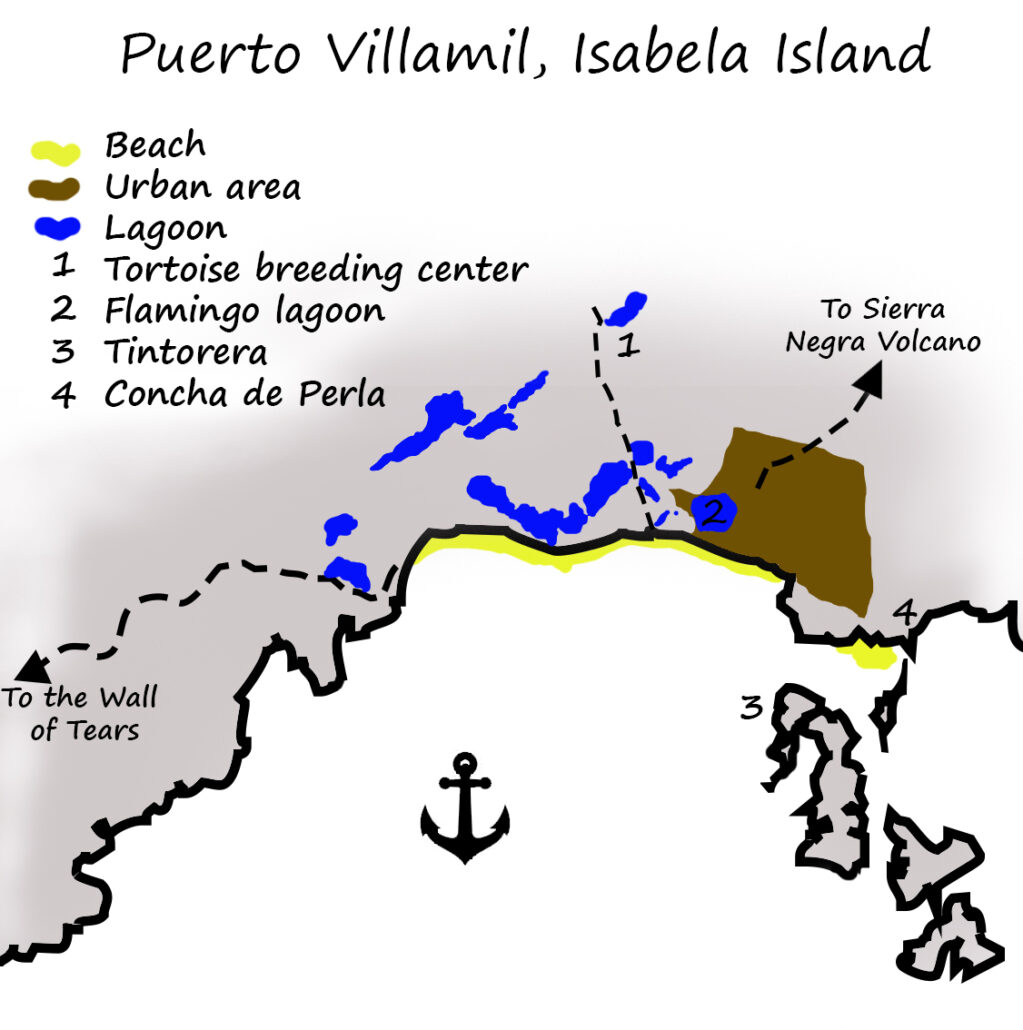
Flamingo lagoons and wetlands
Several lagoons lie within Puerto Villamil itself, bringing wildlife directly into the town. Greater flamingos may be seen feeding in the shallow water, together with white-cheeked pintails, common gallinules, stilts and other wetland birds.
Flamingo numbers vary, and the birds may move between lagoons. The wetlands are therefore worth appreciating as a complete habitat rather than relying on one particular sighting.
The tortoise breeding centre
A boardwalk through the wetlands leads towards Isabela’s giant-tortoise breeding centre. The centre explains the conservation of the island’s distinct tortoise populations and the work undertaken to restore them after damage caused by introduced animals and past human activity.
Visitors can see tortoises of different ages and learn how young animals are reared before being returned to appropriate areas of the island.
El Estero
El Estero is one of the most rewarding stops along the western route, particularly at low tide. A sandy beach appears within the mangroves, where visitors can explore the meeting point between the freshwater channel descending from the highlands and the coastal bay and estuary.
The changing tide gives the site a very different appearance and helps reveal the connection between Isabela’s inland water, mangrove habitat and coastline.
The route towards the Wall of Tears
The route west from Puerto Villamil passes beaches, mangroves, lagoons and dry-zone vegetation. Marine iguanas, birds and occasionally wild giant tortoises may be encountered along the way.
Motorised transport cannot continue for approximately the final 4 kilometres (2.5 miles). This section must be completed on foot or by bicycle, making the return journey approximately 8 kilometres (5 miles), in addition to any further walking undertaken at the Wall itself.
The Wall of Tears was constructed by prisoners during Isabela’s period as a penal colony. Its significance lies primarily in the human suffering and history it represents. Additional walking at the site provides elevated views and further exploration of the surrounding landscape.
Visiting independently or as a combined excursion
Each part can be visited separately. Independent visitors may explore the flamingo lagoons, follow the boardwalk to the tortoise breeding centre or make the longer journey towards the Wall of Tears.
With a private guide and transport to the permitted access point, the flamingo lagoons, tortoise breeding centre, El Estero and Wall of Tears can be combined into one excursion. The final section must still be completed on foot or by bicycle.
The precise combination can be adapted according to the available time, the visitors’ interests and how much walking or cycling they want to undertake.
Planning the visit
The route can be very hot and exposed. Visitors should consider the distance carefully, carry sufficient drinking water and use effective sun protection. Anyone hiring a bicycle should also check its condition before setting out.
Planning these Isabela visitor sites?
Tell us your approximate travel dates, group size and interests. We’ll help you fit this experience into a sensible Galápagos itinerary.