

Charles Darwin Research Station and Tortoise Centre
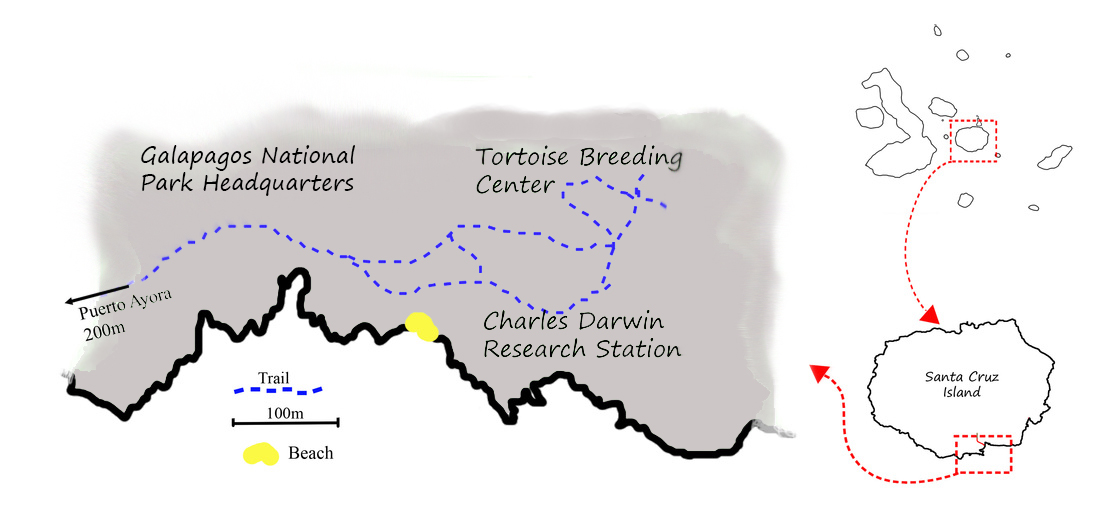
The Charles Darwin Research Station and its tortoise centre in Puerto Ayora provide an introduction to the history and continuing development of conservation in the Galápagos.
From tortoise conservation to ecosystem restoration
Organised conservation work in the Galápagos began in the early 1960s, with giant tortoises among its first and most important priorities. The work has since expanded to encompass all aspects of the islands’ ecosystems.
Today, Galápagos conservation includes breeding and repatriating threatened native species, eradicating introduced animals and plants, restoring ecosystems damaged in the past, and controlling the continuing arrival and spread of invasive species.
The tortoise programme therefore provides a starting point for understanding the much wider conservation story of the archipelago.
Saddleback giant tortoises
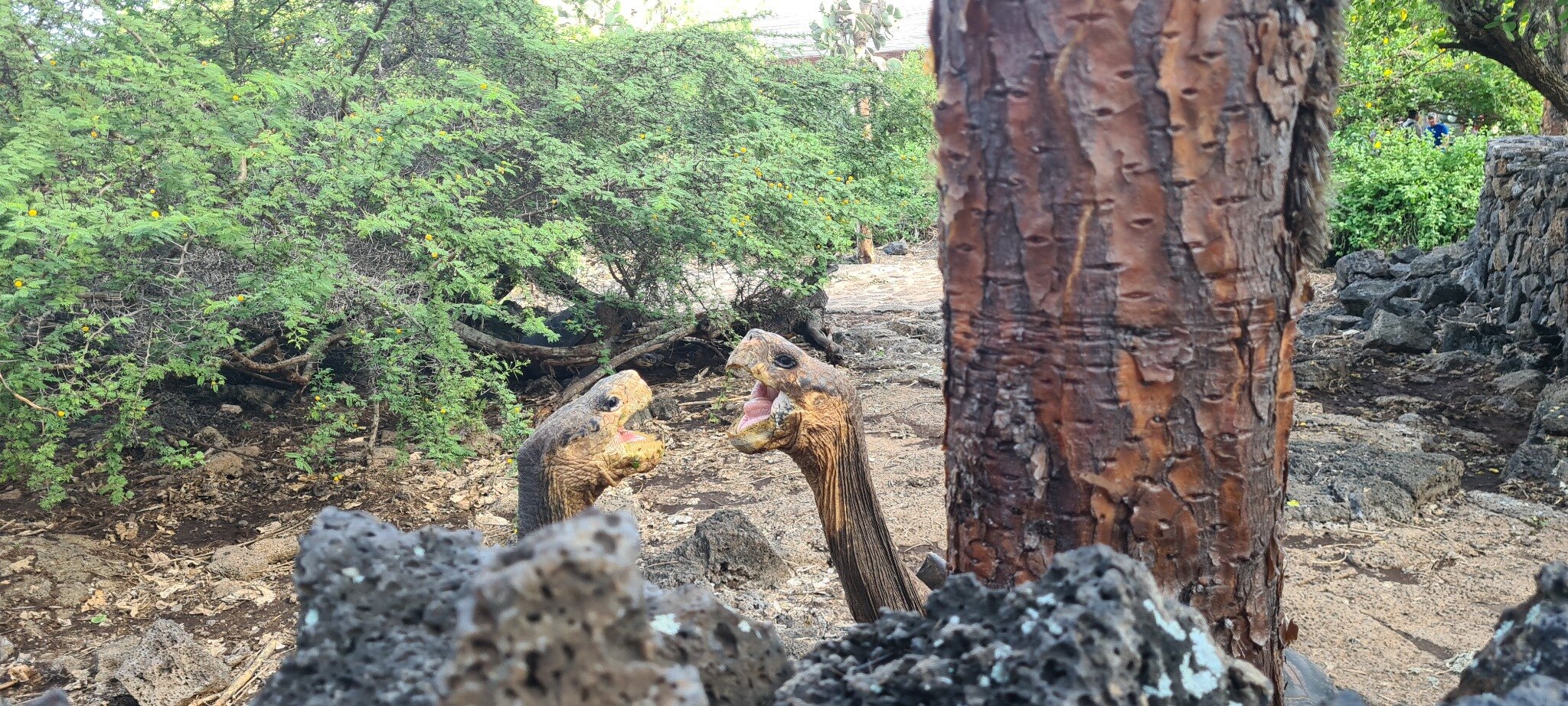
The giant tortoises visitors see at the centre are saddleback tortoises. Their shells rise sharply above the neck, allowing the animals to stretch upwards, and their appearance is strikingly different from the domed Santa Cruz tortoises seen living in the wild in the Highlands.
Seeing saddleback tortoises at the centre provides a vivid contrast with the domed tortoises found in the Santa Cruz Highlands. The difference in shell shape is immediately visible and helps visitors understand how isolation and different island environments have shaped the evolution of Galápagos giant tortoises.
The centre also holds tortoises involved in the recovery programme for the Floreana giant tortoise. This population was previously considered extinct until tortoises with Floreana ancestry were rediscovered, creating the possibility of restoring a lost island population.
Young tortoises and repatriation
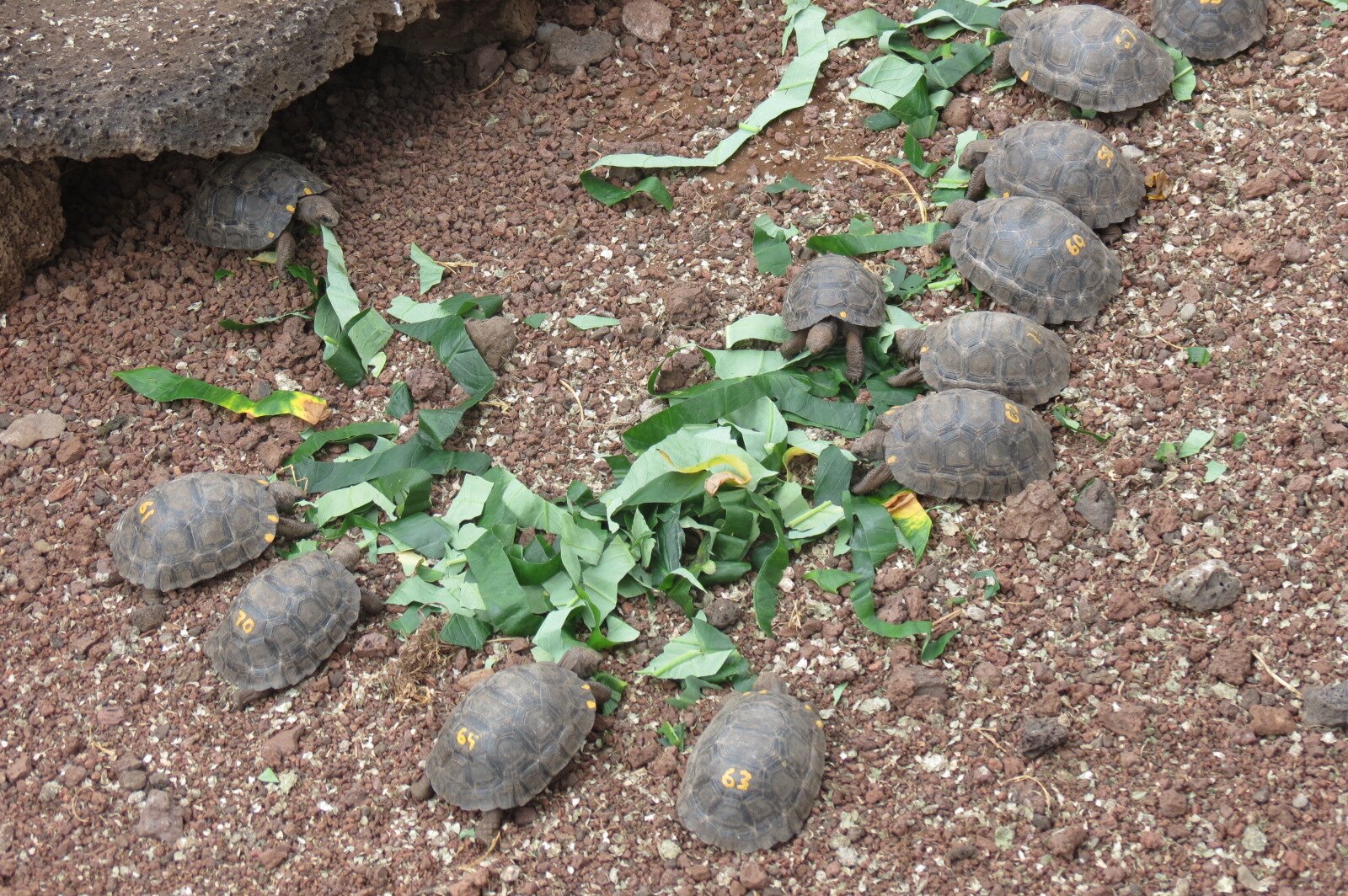
Visitors can see young saddleback tortoises at different stages of development, from recent hatchlings to animals approximately five years old. The tortoises are raised under protected conditions until they are large and strong enough to be returned to their islands of origin.
These breeding and repatriation programmes have played an important role in rebuilding tortoise populations that were severely reduced by human activity and introduced species.
Lonesome George
The preserved remains of Lonesome George, the last known Pinta Island tortoise, are also displayed at the centre. Until his death in 2012, he was an internationally recognised symbol of extinction and wildlife conservation.
His story demonstrates both the irreversible loss of a unique island population and the importance of acting before other threatened species reach the same point.
Planning the visit
Seeing tortoises here is very different from encountering wild animals in the Santa Cruz Highlands. The value of the Research Station visit lies in understanding the saddleback tortoises, the breeding and repatriation programmes, and the wider history of Galápagos conservation.
The Research Station is close to Puerto Ayora and can be included easily in a Santa Cruz stay. It combines well with time around town, while a separate Highlands visit provides the complementary experience of seeing domed giant tortoises living freely in their natural habitat.
Interested in visiting Charles Darwin Research Station and Tortoise Centre?
Tell us your approximate travel dates, group size and interests. We’ll help you fit this experience into a sensible Galápagos itinerary.
WhatsApp chat and voice messages will be available when our new business number is activated.